
Snoring at night is a burden a lot of people have to carry. It can cause a variety of health problems which also affects the sufferers’ quality of life. However, recognizing severe snoring can be quite tricky at times, especially if you live by yourself.
What’s snoring and how does it develop?
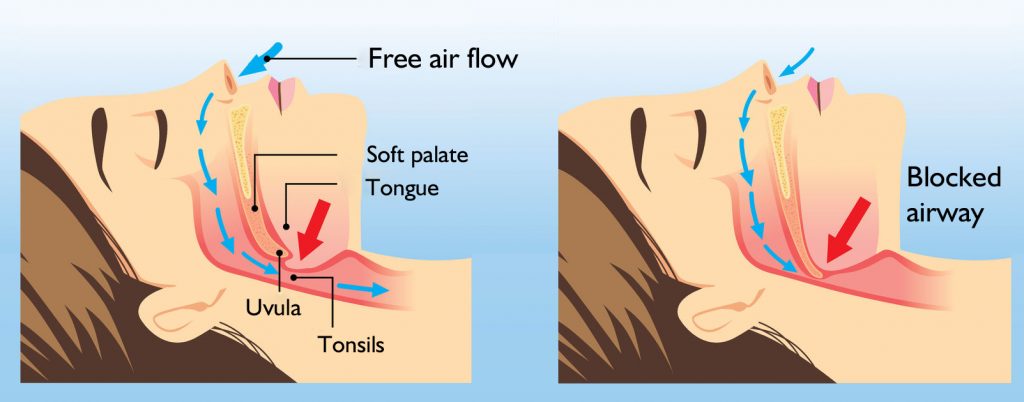
Snoring affects up to 30% of the population, which is by definition the vibration of respiratory structures (especially the uvula and the soft palate) that result in sound. It begins in the upper airways, in the pharynx.
Pharynx is simultaneously responsible for securing the food’s way into the esophagus and the airflow. The muscles of pharynx are playing a really important role even at night: they have to keep open the airways. During sleep, the muscles in your body – including the muscles in the pharynx – relax. This causes your pharynx to tighten up. Through this tight tube the air you breathe in and out will make a noise called snoring if you’re prone to it.
This snoring itself won’t cause any harm to the person but it might hurt those around them.
However snoring is dangerous to those, who’s snoring also comes with something called obstructive sleep apnea or OSA. During sleep apnea the walls of your pharynx close up and block your airways. When you take a deeper breath it opens up again but it causes temporary pauses in your breathing. When sleep apnea is severe it can occur several times per hour. In these cases it can lead to several health problems such as high blood pressure, problems with brain circulation or even heart attack. If you experience severe fatigue, memory loss, confusion, frequent headaches you should follow up with a specialist in order to treat you and prevent any further damage.
Are there any risk factors that can cause snoring?
- Age: as you grow older, snoring can be more prevalent because the muscle tones deteriorate in your pharynx. When a child snores it’s more likely due to swollen tonsils in their throat or nose (adenoid).
- Gender: men are more likely to be affected by it than women (this ratio is 10:1)
- Weight: overweight and obese people snore more often (when this is the case, a part of the treatment is to lose weight)
- Lifestyle choices (smoking, drinking alcohol, abundant meals at night, medications –especially tranquilizers)
- Body position: when you lay on your back, snoring develops more often, even if you’re healthy
- Anatomical factors: short, thick neck, overbite, big tongue
- Illnesses: big tonsils, big lingual tonsils, big adenoid, nasal septum deviation, nasal polyps, hyperthyroidism or hypothyroidism
- Family risk: If someone in your family had bad snoring or even sleep apnea before, you’re more likely to develop it
How do I know if I snore?
Snoring can be quite obvious, it’s a sound that’s hard to ignore –at least for our environment. However, often people who live (or at least sleep) alone often wonder whether they suffer from snoring or not. After all, in our sleep we aren’t aware of the things happening around us, and to us.
If you don’t live alone and there are people around you, chances are they will complain about the noises you make at night. They might even tell you that you sound like someone’s suffocating. If they don’t, ask them to watch out for a few days for you.
If you live alone, or don’t have anyone near you, don’t worry. There are signs and symptoms to look out for:
- you often wake up at nights or your sleep is restless
- you are unusually tired during the day (and you don’t find an explanation for it)
- you wake up at night sweating
- you experience worsening memory, concentration issues or memory loss
- you wake up with a really dry mouth
- you develop high blood pressure
- you experience headache
- you have panic attacks or even depression
If you have some (or all) of these symptoms, think about whether you should investigate the causes of snoring or sleep apnea.
Book an appointment at our clinic and our specialist will provide you a device called pulse oximeter. You can take it home and it will measure whether you suffer from snoring related sleep apnea. If necessary we suggest a sleep endoscopy to diagnose the issues causing your snoring.
To read more about the treatment of snoring and sleep apnea click here.